

STATIC RUN
PROLOGUE

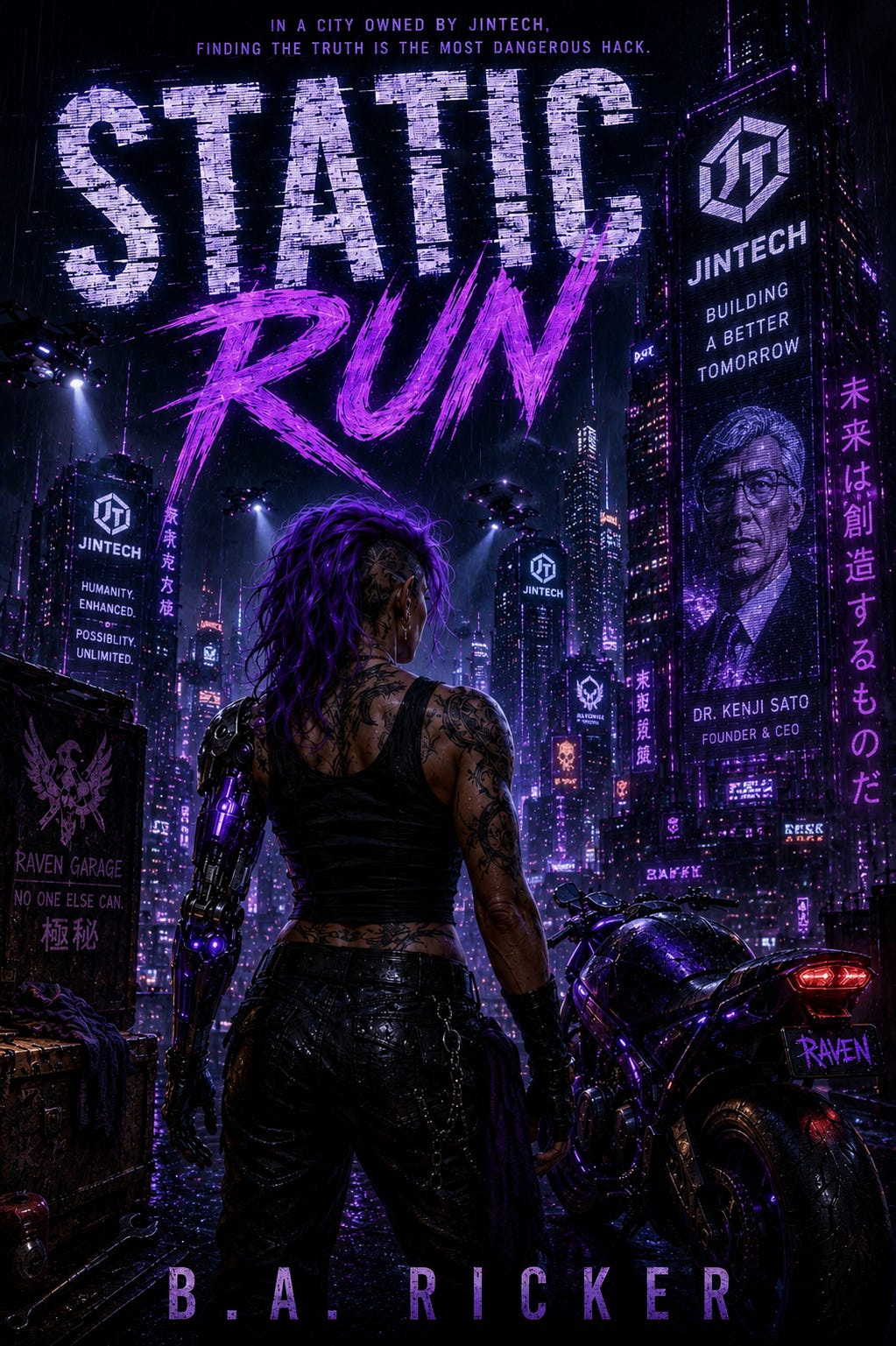
Helix City was built on a promise.
A promise of progress. A promise of innovation. A promise that technology could solve every problem humanity had ever faced.
The city rose from the coastline like a monument to that dream—towering steel spires wrapped in neon light, corporate logos glowing brighter than the stars above. From a distance, Helix City looked beautiful.
Up close, it was something else entirely.
The city spiraled upward around a central core, each district built atop the bones of the last. The wealthy lived high above the clouds in glass towers where artificial sunlight illuminated rooftop gardens and private skyways. Corporate executives crossed entire districts without ever setting foot on a street. Their neural com chips—top-tier hardware with executive-level encryption—connected them to private networks ordinary citizens couldn’t even access. They moved through the world wrapped in layers of digital privilege, their every transaction seamless, their every movement tracked only by systems they controlled.
Below them, the Middle Spiral buzzed with commerce, transit hubs, entertainment districts, and endless streams of workers chasing the promise of a better life. Here, the com chips lagged. Glitched. Flooded users with advertisements for products they couldn’t afford. The Middle Spiral believed in the dream because it had to. Because the alternative was falling.
And beneath it all lay the Lower Spiral.
A maze of rain-slick alleys, crowded markets, flickering signs, and aging infrastructure where mechanics, runners, hackers, and dreamers carved out lives in the shadows of the towers above. The rain never seemed to stop there. Neon advertisements reflected endlessly in puddles that never quite dried. The air smelled of engine oil, ozone, and street food sold from carts that had been in the same spot for twenty years. Every wall carried layers of graffiti—territorial markers, political statements, memorial tags for people who’d disappeared. Every corner hid a story. Every resident knew someone who’d vanished into JinTech’s machinery and never come back.
At the heart of it all stood JinTech.
Its logos glowed from skyscrapers hundreds of stories tall. Its technology powered the transit system, hospitals, communications network, and nearly every cybernetic implant in the city. JinTech manufactured the neural com chips installed behind every citizen’s ear. JinTech controlled the infrastructure that kept Helix City alive. JinTech employed half the population and owned the other half’s debt.
To some, JinTech represented hope.
To others, control.
Either way, nobody escaped its influence.
People often joked that Helix City didn’t have a government. It had JinTech. And most days, nobody could tell the difference.
By day, the city chased the future—gleaming transit pods, holographic billboards, promises of enhancement and evolution. By night, it revealed its true face. Drones patrolled the skies with searchlights that cut through the rain. Corporate holograms flickered across entire buildings, advertising implants that could make you faster, stronger, better. Runner crews moved through the darkness carrying secrets worth killing for, their modified com chips fighting a constant war against the surveillance net that blanketed every street.
And somewhere beneath the endless glow of neon lights, Helix City kept its deepest secrets buried.
At least, until someone started digging.
Intriguing prologue! 💯
With that much control can come lots of consequences. ⚖️
Definitely ready for more adventures in Helix City.